An independent story
Built from the ground up.
The Last Recruit is an independent rock band from Leigh-on-Sea, founded by school friends brought together through a shared passion for music, recording and live performance. The band has evolved from performing grunge covers in local youth venues into writing, recording and independently releasing original music spanning pop, alternative rock, grunge and metal.
The short version
A timeline
of the noise.
Key points in the band's evolution, from the first name to the next chapter.
- 2024Celestial Horizon formed.
- 2025The Last Recruit name and new era began.
- 2026Life album released.
- 20262016 single released.
- 2026+The Descend era.
The Genesis
The band's journey began in 2024 under the name Celestial Horizon. Inspired by bands such as Nirvana, Green Day and other alternative rock acts, the original lineup performed covers at school events, Music-on-Sea performances and local venues around Southend and Leigh-on-Sea. These early performances established the band's energetic live reputation and sparked an ambition to begin writing original material.
Rebirth & the DIY philosophy
In 2025 the group adopted the name The Last Recruit, marking the beginning of a new era. Around the same time, the band experienced the departure of its founding bassist, Thomas Layton. Instead of bringing the project to an end, frontman Nicolas Rodrigues and drummer Sam Risbin continued writing together. They also welcomed a new bassist named Charlie.
The philosophy was simple: create the best recordings possible using whatever equipment was available.
Determined to learn every stage of music production, Nicolas spent months teaching himself recording, editing, mixing and mastering through experimentation rather than formal training.
The making of Life
This approach led to the creation of the band's debut album, Life. Recorded almost entirely in Nicolas' bedroom over approximately six months, the project represented the band's first full-scale original release. Most of the album was recorded using microphones placed in front of amplifiers and vocal performances.
The Life tracking station
A glimpse into the original bedroom studio.
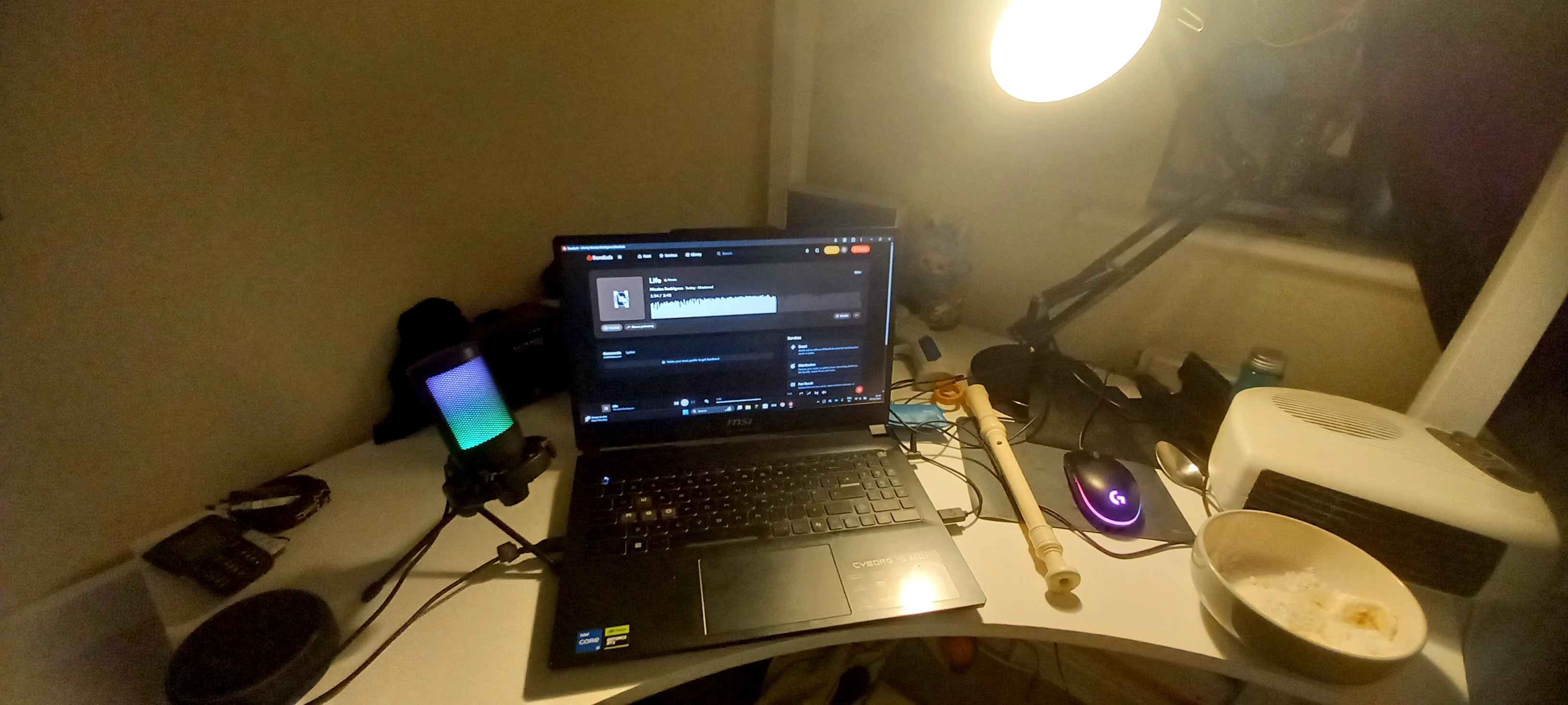
Musically, Life surprised many people familiar with the band's live performances. While audiences knew The Last Recruit as a grunge and alternative rock band, the album explored a far more melodic and pop-influenced direction.
Fog & friction
Among the songs featured on Life, “Field of Fog” and “Hole of the Bump” stand as the album's two defining pieces, together capturing its central themes and emotional identity.
“Field of Fog” reflects on memory, nostalgia and childhood. The song contrasts the warmth of early memories with the uncertainty of growing older. By contrast, “Hole of the Bump” explores physical pain and discomfort.
The completion of Life marked a turning point. Every lesson learned during the album became the foundation for future releases.
Although Life represented a major creative achievement, its commercial release proved to be the band's greatest logistical challenge. During digital distribution, repeated moderation issues forced the removal of two completed recordings: “50s Ghosts” and a professionally recorded version of “Life”.
The 2016 bridge
Following the completion of Life, The Last Recruit entered a new stage of development. The knowledge gained from months of recording, mixing and experimenting during the album's production allowed the band to work with a much faster and more refined creative process. This evolution became clear with the standalone single 2016, a song that represented the connection between the melodic world of Life and the heavier direction of the upcoming Descend era.
Unlike the six-month production period of Life, 2016 was completed in approximately one week. The speed of the recording process demonstrated how much Nicolas' production workflow had developed, allowing the band to move from writing an idea to releasing a finished track far more efficiently. Shortly after completion, the song became available on streaming platforms, marking one of the fastest releases in The Last Recruit's history.
The production of 2016 combined the band's established bedroom recording methods with support from Belfairs Academy's music department. The majority of the track—including vocals, guitars, bass, editing, mixing and mastering—was completed by Nicolas inside his bedroom studio using his personal recording setup.
The drums were performed by Sam Risbin and recorded inside one of Belfairs Academy's music classrooms. With the assistance of a music teacher, two Zoom microphones were used to capture the drum performance before the recordings were combined into a stereo track and transferred back to Nicolas for editing and integration into the final production. This collaboration became another example of The Last Recruit's DIY approach: combining available resources, education and independent creativity to create original music.
The 2016 & Descend setup
The recording environment as the sound evolved.
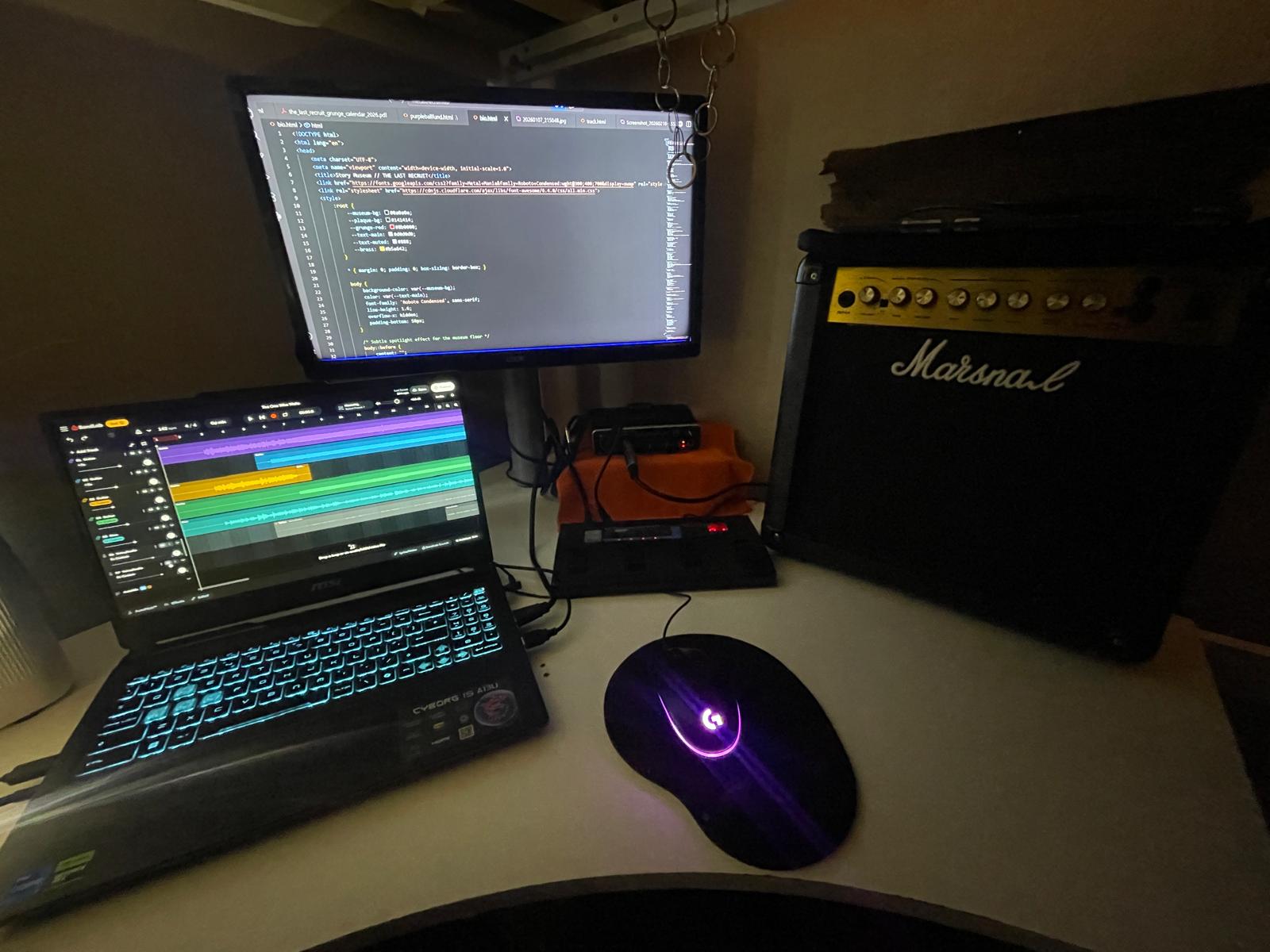
Musically, 2016 occupies a unique position within The Last Recruit's catalogue. Rather than belonging entirely to either the Life or Descend eras, the song acts as a bridge between them. It carries the melodic songwriting, cleaner production and experimental approach developed during Life, while introducing the heavier guitar tones, stronger rock influence and increased intensity that would later define Descend.
The creation of 2016 marked a major milestone for the band. It proved that the lessons learned during Life had permanently changed the way The Last Recruit created music. The song was not only a new release, but evidence of the band's progression: a point where improved production skills, faster workflows and evolving musical identity began to merge into a new era.
A return to roots
During the creation of 2016, The Last Recruit were also working on Descend, a project that marked another major evolution in both songwriting and production. Returning to the band's heavier roots, Descend explores rock and metal while showcasing a significantly more detailed production style.
Outside the studio, The Last Recruit has continued to perform throughout Essex, appearing at venues and events including the Palace Theatre, The Fickle Pickle Club, Music-on-Sea performances and community events.
An independent progression
Everything associated with The Last Recruit has been built independently. The band writes its own songs, records and produces its own music, designs artwork, manages releases, develops promotional material and maintains its own online presence without the support of a record label.
The story of The Last Recruit is ultimately one of continuous progression. From humble beginnings as school friends performing covers to independently producing and releasing original music across multiple genres, the band continues to evolve.
Not just the music.
See the moments, rooms and stages behind the story.
Stay a little longer